Showing posts with label Birds. Show all posts

Friday, 25 March 2011

The Robotic Bird

Festo, a leader in robotics, has created a robotic bird inspired by the Herring Gull which flies in a pretty realistic way.  A bit of a gimmick at present but with obvious military potential.


Whatever next?  Engadget has the full story Festo's SmartBird robot takes off with elegance, doesn't poop on you (video) -- Engadget

Wednesday, 23 March 2011

BBC News - Sea eagles given more protection


784px-White_tailed_Eagle_DG

Good news that (White-tailed) Sea Eagles, Haliaeetus albicilla, are to be given more protection.  The Sea Eagle was reintroduced into Scotland in 1975 having become locally extinct.  Gradual recovery has occurred but this magnificent bird, one of the greatest wildlife sights in Scotland, is not out of danger quite yet.  For all the details see BBC News - Sea eagles given more protection

Monday, 21 March 2011

Rare albatross is unique species


Amsterdam Albatross

The rare Amsterdam Albatross only discovered in 1983 on Amsterdam Island in the southern Indian Ocean has now had its DNA analysed to show that it is not a sub-species of the Wandering Albatross Diomedea exulans but in fact a species in its own right.  For the full story see:BBC - Earth News - Rare albatross is unique species

There is only a handful of very large diomedeans so the discovery of a new one is hugely significant.  Hopefully its rarity, only 170 individuals, will be a benefit in its survival and will persuade us to make a real effort to protect it.  Since it apparently only breeds on Amsterdam Island we can be confident that it will be monitored properly.  Its scientific name is Diomedea amsterdamensis (rather dull but suitably specific!)
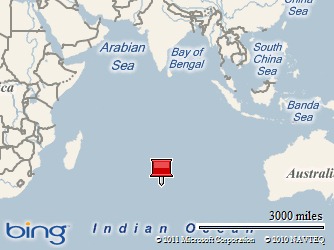
Map picture

Wednesday, 28 July 2010

Scots seabird numbers take a dive

Scots seabird numbers take a dive: "The populations of some Scottish seabirds have almost halved in the past decade, according to a new report." (from BBC Scotland)

This is terrible news.  We need to do something NOW!

Saturday, 17 April 2010

South Atlantic becomes more seabird-friendly

Great progress has been made in ensuring the safety and survival of seabirds in the south-east Atlantic.  As BirdLife International reports changes in fishing practices have helped to curb the decline of seabirds such as the Black-browed Albatross Thalassarche melanophrys:


South Atlantic becomes more seabird-friendly: "BirdLife International and WWF South Africa recently achieved a major conservation success by improving the methods used by commercial fishermen in the south-east Atlantic Ocean to avoid killing seabirds."

These very positive developments auger well for similar ventures in other parts of the world.  Albatrosses are magnificent birds that are in great peril and every step in ensuring their survival is vital.


Bookmark and Share

Back

Wednesday, 6 January 2010

Birdlife International is carrying an item on a model for wildlife-friendly energy development in Wyoming.  We would do well to study this carefully here in Scotland.  The main direction for future energy production in Scotland is renewables; particularly wind farms which have drawn many objectors owing to the assertion that such installations are detrimental to wildlife, notably birds. The Wyoming situation involves an even more damaging modus operandi - oil and gas production and its impact on near-threatened species such as Sage Grouse.  Let us hope that we can learn from the changes made by the Federal Bureau of Land Management  and not dismiss them, as we so often do, as being NDH (not designed here).


Bookmark and Share


Tuesday, 29 December 2009

Another New Species in the Greater Mekong

I have written before about the discovery of new species and the irony of this occurring when extinctions are happening with increased frequency.  I have even raised the possibility of a species becoming extinct before we even know it exists.  Here is one new species, an exquisite tiny leaf warbler, to which this won't apply.  And it is most welcome because on the Mekong birds are not very prevalent.


Bookmark and Share


Wednesday, 2 December 2009

Bullfinches

We had some bullfinches in our garden today.  So what?  Well we seldom get bullfinches despite them being described as "a common garden bird", and it has been shown that the UK population is decreasing so when we do see them it is a great joy.
Usually they appear as small mixed-sex flocks of up to 20 or so.  Today it was a male and two females only. They gleaned the plants on the garden archway for insects and then in a trice they were gone, rapidly zooming across the open ground to the West. Now you see them now you don't!


Bookmark and Share


Friday, 6 November 2009

Saving the Albatross

Three albatrosses have been added to Annex 1 of the Agreement on the Conservation of Albatrosses and Petrels (ACAP), thus ensuring that the Agreement covers all of the species of albatross. This very welcome move ensures that albatrosses now have full legal protection in International Law.
Albatrosses are generally thought of as Southern Hemisphere birds but these three, the North Pacific species of albatross, Short-tailed Albatross Phoebastria albatrus, Laysan Albatross Phoebastria immutabilis and Black-footed Albatross Phoebastria nigripes are all found in the Northern Hemisphere.  There is now a real chance of arresting the decline in population across all species of albatross thus helping to conserve these magnificent birds.


Photo by Matt Knoth / Flickr 

Bookmark and Share


Tuesday, 6 October 2009

Thousands say goodbye to migratory birds

Thousands say goodbye to migratory birds: "Despite stormy weather across Europe over the past weekend, more than 63,000 people set out to bid farewell to birds."

If you have any doubts about how important bids are to so many people read this...

Tuesday, 29 September 2009

Deathly owl scares Zimbabwean family

Deathly owl scares Zimbabwean family

Shared via AddThis

Well at least they didn't kill it and try to eat it.  I have it on good authority that owls are absolutely disgusting to eat (fortunately!)


Bookmark and Share


Birds of the Kakadu

Being an Australian (that will come as a surprise to some of you!) I have always thought that one of the natural jewels of Australia is its avifauna which is rich and extensive.  One of the best places to see birds in Australia is the Kakadu National Park - a World Heritage site.  There are so many different birds to see in this amazing wetlands situated in the northern part of the Northern Territory.  Some of the more unusual highlights include Brolga (a species of crane), Jabiru (a species of stork), Magpie Goose, White-bellied Sea Eagle, Great Egret and a myriad of smaller birds.  Here is a small collection:


Magpie Goose (Anseranus semipalmata)


Magpie Geese in flight


Jabiru (Ephippiorhynchus asiaticus)


White-bellied Sea-Eagle (Haliaeetus leucogaster)


To see more pictures of the Kakadu go to Flickr


Bookmark and Share


Where Have All the Birds Gone? (On the Mekong at Least)

In 2006 I travelled down the Mekong River from Houayxay in the North, close to the Golden Triangle, to Louang Phrabang in the centre of Laos, a journey taking two days with an overnight stop at Pak Ben.  For pictures of this journey see Flickr.  I had always wanted to do this journey and it did not disappoint.  We travelled by rice boat which took passengers down river and returned with a cargo of rice from the more fertile rice fields of the South.  

As the miles quietly slipped by it was easy to imagine that you were on a boat a thousand years ago (except for the sound of the diesel engine!) or living out Apocalypse Now without the war.
One of the things that really struck me was the absence of birds on the river. You could be forgiven for anticipating many new species in such an idyllic location but it was not to be.  During the two days we spent on the river I saw only 3 Pacific Swallows (Hirundo tabitica)!  There was absolutely nothing else.
This state of affairs is hard to reconcile with the results of the WWF’s report First Contact in the Greater Mekong which covered the discovery of many new species in this region including the bald songbird which I have mentioned in my previous post Extinction is Forever .
I have puzzled over this disparity for some time and have concluded that it might be because of the proclivity of people in Indochina to eat anything that moves flies or swims.  In those parts of the country that are more heavily populated like the villages along the Mekong it is certainly the case that local markets sell huge quantities of small birds for food.  Could this be the explanation?


Bookmark and Share


Thursday, 10 September 2009

Extinction is Forever

It's ironic isn't it that at a time when the loss of species of living creatures is great, we seem to be discovering new species, previously unknown to science at a great rate.

New species discovered in the last twelve or so months include:

  • a new type of Clouded Leopard in Borneo and Sumatra
  • a new type of Malaria (not a new strain) in the Far East
  • an isopod (a sort of louse) that survives on eating fish tongues
  • a parrot no bigger than a man's thumb in Papua and New Guinea (PNG)
  • a rat bigger than a man's arm - in fact the World's largest - in PNG
  • a new species of song bird with a bald head in Laos
And there are many others.  The one thing that links all these new species is rainforest.  That is not to say that new species are only found in rainforests, they are not, but rainforests do host a disproportionate number of the new discoveries, with no signs that the pot is exhausted. If the rainforests of the World are squandered not only will we succeed in destroying a myriad of known species, but in all likelihood a host of species we don't even know about.  And humanity will be the poorer for it.

Back